Monday, 29 May 2017
Sankat Mochan temple
Sankat Mochan temple is one of the sacred temples of Varanasi. It is located in the southern part of Varanasi, near the Banaras Hindu University. It is dedicated to the Hindu God, Hanuman. The word "Sankat Mochan" means one who helps in removing sufferings i. e. Lord Hanuman. Tulsidas, the author of the famous Hindu epic Ramacharitamanasa, founded the Sankat Mochan temple. According to Hindu mythology, one who visits the Sankat Mochan temple regularly, his wishes get fulfilled.
Every Tuesday and Saturday, thousands of devotees queue up in front of the Sankat Mochan temple to offer prayers to Lord Hanuman. According to Vedic Astrology, Hanuman protects human beings from the anger of planet Saturn and those who have ill placed Saturn in their horoscope visit the Sankat Mochan temple to get remedy. People put "Sindoor" on the statue and offer "laddoos" to Lord Hanuman. The "Sindoor", from the statue of Lord Hanuman is put on the foreheads of devotees.
KashiBridge
Malviya Bridge, inaugurated in 1887 (originally called The Dufferin Bridge), is a double decker bridge over the Ganges atVaranasi. It carries rail track on lower deck and road on the upper deck. It is one of the major bridges on the Ganges and carries the Grand Trunk Road across the river.
In Rudyard Kipling's story The Bridge Builders, the bridge is given the name Kashi Bridge, after the nearby city also known as Varanasi. Dufferin Bridge's opening ceremony was delayed because of floods; the Kashi bridge in the story also faces similar problems due to flooding just before it was opened to public.
Labels:
KashiBridge
Location:
Varanasi, Uttar Pradesh, India
Saturday, 10 December 2016
Ramnagar ki yatra /The Ramnagar fort and Palace
Kashi might be the abode of the gods, but it also been ruled by various kings, who left their imprint on the city. The Raja Ghat on the river, for example, was built by one of them, and history tells us that one of the kings actually jumped from one of its high turrets while trying to escape the British troops during the mutiny, and actually succeeded!
Our first view of the Ramnagar Fort from the boat
The last remnant memory of the kings of Benares is the Ramnagar Fort and Palace on the opposite banks of the Ganga, in a section of which the present scion of the royal family still resides. The palace is about 15Kms away by road, and an auto takes about half an hour to reach there. We however chose the longer, but more interesting and relaxing option- that of taking a row boat to the palace across the river. The journey took us a good one and a half hours, but the sheer bliss we experienced made every minute worth it!
The palace has now been converted into a museum, which closes around 4:30PM. If you want to have a leisurely stroll among the various antiquities displayed, make sure you keep at least 2 hours for the palace alone.
The entrance to the fort- the Lal Darwaza
The first section of the museum has various vintage cars belonging to the royal family. After this, we are led back in time thanks to the impressive collection of howdahs and palanquins made of silver and ivory. It is indeed wonderful to see such magnificence, and one wonders what things would have been like when the kings were at the height of their glory. The next section comprises entirely of weapons, something my son enjoyed thoroughly. He is just 5 years old, and doesn’t really relate to vintage cars and palanquins, but weapons – swords, shields and guns- these are things he certainly finds fascinating! We had the same experience at Akkalkot, and I still wonder why men have always been fascinated by weapons and killing. It is rare to find a fort or palace museum without a display of weapons. One can understand that kings in those days spent most of their time fighting, but to think that they took more care to store and preserve weapons more than other things like written records, for instance, is something that I am unable to digest.
Entrance to the Palace
Anyway, coming back to the museum, the portions I found most interesting were those which displayed beautiful works of art, and gifts from kings of other states. These were truly worth seeing, considering that with the great advances in science and technology, it is impossible to come across such wonderful handwork. Carvings on ivories, brass and bronze, tapestries from various regions of ancient India… The list goes on and on
The Palace
The section containing the ancient clothes of the kings, priceless collections from their wardrobe, don’t look so priceless any more. Most of them are moth eaten, and deserve much more care than they are given at present. The section containing portraits of the rulers is good though, and a must-see for al history buffs.
The Palace Door
The pride of the museum is an ancient clock which displays not only the year, month, week, and day, but also astronomical facts about the sun, moon and constellations of stars! The fact that this clock is working till date is impressive in itself, and makes a visit to the museum worthwhile.
Another Section of the Palace
The name ‘Ramnagar’ is believed to have been given by the kings of Benares, when they decided to build their fort at this place. In ancient times, it was known as Vyasa Kashi, because the great Sage Vyasa (of Mahabharata fame) is believed to have lived here. According to the legend, Vyasa once incurred the wrath of Lord Shiva, who exiled him from Kashi. Vyasa chose to reside on the opposite bank of the Ganga, from where he could at least see the holy city. Thus this place came to known after him as Vyasa Kashi.
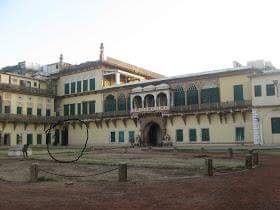
The Palace- The circled portion shows the entrance to the passage leading to the Vyasa Temple
The Palace and the Temple(on the right)
A tunnel-like passage from the quadrangle of the fort leads us under the fort to the river, on the banks of which is a temple known as the Vyasa temple. This temple has 3 lingams representing Vyasa, his son, Suka and Kashi Vishwanath. There is nothing much one can say about the temple, except that its location is absolutely wonderful. On one side is the Ganga, flowing in full force and on the other side are the high walls of the palace. The view is breathtaking, and as for the breeze, I have no words to describe it! We felt like spending the rest of the evening there, but were shooed away by the watchman who wanted to lock up the place. Try to reach there early in the evening, so that you can spend at least an hour sitting on the walls of the fort, enjoying the lovely view and breathing in the fresh air. I can assure you that it will be a wonderful experience.
The Facade of the Palace
Enjoying the breeze on the balcony facing the river.
Enjoy with family
Friday, 9 December 2016
important's of kashi
Varanasi, also referred to as Kashi or Banaras, is the holiest city in India. Situated on the banks of the Ganges, in the state of Uttar Pradesh, Varanasi is the spiritual centre of the country. Millions of Indians come to this city to wash their sins away in Ganga, attain forgiveness, and be closer to obtaining moksha.
Moksha is Nirvana, freedom from the cycle of death and life. It is believed that the souls of the people who die here, or are cremated here, attain moksha. The Varanasi Ghats are especially beautiful, and also the centre of most spiritual activities and energy.
Banaras ke rang hjar
Varanasi, also referred to as Kashi or Banaras, is the holiest city in India. Situated on the banks of the Ganges, in the state of Uttar Pradesh, Varanasi is the spiritual centre of the country. Millions of Indians come to this city to wash their sins away in Ganga, attain forgiveness, and be closer to obtaining moksha.
Moksha is Nirvana, freedom from the cycle of death and life. It is believed that the souls of the people who die here, or are cremated here, attain moksha. The Varanasi Ghats are especially beautiful, and also the centre of most spiritual activities and energy.
Sunday, 27 November 2016
The southernmost ghat of Varanasi
Assi Ghat is renowned for being the place where students, foreigners, and researchers reside. It’s the southernmost ghat of Varanasi, and is the meeting point of rivers Ganga and Assi. They are large and popular spot for entertainment and boat rides. It has been featured in a couple of novels and Bollywood films.
Situated to the north and an extension of Assi Ghats is the Ganga Mahal Ghat, named after a palace built near it. In 1830, the Narayan dynasty constructed a palace on the ghats and was named Ganga Mahal. Educational institutions use the palace now. Many of the ghats are known for the architecture of the palaces and other buildings next to them.
How to get Moksha
Varanasi, also referred to as Kashi or Banaras, is the holiest city in India. Situated on the banks of the Ganges, in the state of Uttar Pradesh, Varanasi is the spiritual centre of the country. Millions of Indians come to this city to wash their sins away in Ganga, attain forgiveness, and be closer to obtaining moksha.
Moksha is Nirvana, freedom from the cycle of death and life. It is believed that the souls of the people who die here, or are cremated here, attain moksha. The Varanasi Ghats are especially beautiful, and also the centre of most spiritual activities and energy.
Saturday, 26 November 2016
Banarasi saris.....
Varanasi is famous for its silk weaving industry, with fine silks and Banarasi saris being legendary. Every woman in India covets a Banarasi saris, which are mostly worn in weddings and special occasions. While in Varanasi, you can also visit Sarnath, 13 km away from Varanasi, a major Buddhist pilgrimage site. Sarnath is where Gautama Buddha is said to have given his first discourse after attaining enlightenment.
Some beautiful place in Varanasi
Of the 15 most notable mosques in Varanasi. The most significant ones are the Gyanvapi mosque, Abdul Razzaq, Chaukhamba, and the Alamgir Mosque. Most of the mosques are constructed on the remains of Hindu temples, which were destroyed during the reign of Mughal Emperor Aurangzeb. The Gyanvapi mosque is a Jama Masjid, built in 1664 CE, and its entrance is partially modelled on the Taj Mahal. The name of the mosque comes from the Gyan Vapi well, located within the mosque, meaning “well of knowledge”.
Other notable places to see in Varanasi are the Ramnagar Fort, the Bharat Kala Bhawan, Ashoka Pillar, Aghor Peeth, and the Central University for Tibetan Studies. Varanasi is renowned for its traditional music culture, and educational history, home to numerous eminent figures in history.
Other Places to Visit in Varanasi
Varanasi is one of the oldest continuously lived in cities in the world, and home to thousands of temples. The most most important and significant one is the Kashi Vishvanath Temple. Dedicated to Lord Shiv, this temple is the site of one of the twelve jyotirlings, and, according to Hinduism, one of the seven sacred sites of India. The Durga Temple, constructed in honour of Goddess Durga, is another famous temple in Varanasi. It is built in the Nagara architectural style, and is painted with red ochre, a colour associated with Durga. The temple is popular for its celebrations of Nag Panchami.
Ghats of Varanasi/ Banaras Ghat
Varanasi is home to many famous temples and mosques, but its the Ghats of Varanasi that draw thousands of tourists each year. Ghats are long, stone steps that gently sink into the river. The ghats are almost 100 in number, and are used for various purposes, like bathing, cremations, swimming, prayers, boating, etc. The ghats were constructed during the reign of the Maratha dynasty, around the 18th century. Some of them are more famous and popular than most.
Dashashwamedh Ghat
Dashashwamedh Ghat
Dashashwamedh Ghat is the one of the oldest and most busiest ghats. It stays lively with flower sellers, masseurs, boat rides, marketplace, and people coming and going. This is where the famous Ganga aarti (worship ceremony) happens each evening, and is good place to sit, relax, and watch all the activity.Wednesday, 23 November 2016
Thursday, 24 March 2016
होली की शुभकामना
है होली का त्यौहार चहुओर मस्ती की बयार ~ कुछ पक्तियां ~ आप सभी को होली की शुभकामना ~
ब्रज मंडल में आ गया, होली का त्यौहार ।।
2
लाल हरी नीली हुई, नखरैली गुलनार ।
रंग-रँगीली कर गया, होली का त्यौहार ।।
3
आंखों में महुआ भरा, सांसों में मकरंद ।
साजन दोहे सा लगे, गोरी लगती छंद ।।
4
कस के डस के जीत ली, रँग रसिया ने रार ।
होली ही हिम्मत हुई, होली ही हथियार ।।
5
हो ली, हो ली, हो ही ली, होनी थी जो बात ।
हौले से हँसली हँसी, कल फागुन की रात ।।
6
होली पे घर आ गया, साजणियो भरतार ।
कंचन काया की कली, किलक हुई कचनार ।।
7
केसरिया बालम लगा, हँस गोरी के अंग ।
गोरी तो केसर हुई, साँवरिया बेरंग ।।
8
देह गुलाबी कर गया, फागुन का उपहार ।
साँवरिया बेशर्म है, भली करे करतार ।।
9
बिरहन को याद आ रहा, साजन का भुजपाश।
अगन लगाये देह में, बन में खिला पलाश ।।
10
साँवरिया रँगरेज ने, की रँगरेजी खूब ।
फागुन की रैना हुई, रँग में डूबम डूब।।
11
सतरंगी सी देह पर, चूनर है पचरंग ।
तन में बजती बाँसुरी, मन में बजे मृदंग ।।
12
जवाकुसुम के फूल से, डोरे पड़ गये नैन ।
सुर्खी है बतला रही, मनवा है बेचैन ।।
13
बरजोरी कर लिख गया, प्रीत रंग से छंद ।
ऊपर से रूठी दिखे, अंदर है आनंद ।।
14
होली में अबके हुआ, बड़ा अजूबा काम ।
साँवरिया गोरा हुआ, गोरी हो गई श्याम ।।
15
कंचन घट केशर घुली, चंदन डाली गंध ।
आ जाये जो साँवरा, हो जाये आनंद ।।
16
घर से निकली साँवरी, देख देख चहुँ ओर ।
चुपके रंग लगा गया, इक छैला बरजोर ।।
17
बरजोरी कान्हा करे, राधा भागी जाय ।
बृजमंडल में डोलता, फागुन है गन्नाय ।।
18
होरी में इत उत लगी, दो अधरन की छाप ।
सखियाँ छेड़ें घेर कर, किसका है ये पाप ।।
19
कैसो रँग डारो पिया, सगरी हो गई लाल ।
किस नदिया में धोऊँ अब, जाऊँ अब किस ताल ।।
20
फागुन है सर पर चढ़ा, तिस पर दूजी भाँग ।
उस पे ढोलक भी बजे, धिक धा धा, धिक ताँग ।।
21
हौले हौले रँग पिया, कोमल कोमल गात ।
काहे की जल्दी तुझे, दूर अभी परभात ।।
22
फगुआ की मस्ती चढ़ी, मनुआ हुआ मलंग ।
तीन चीज़ हैं सूझतीं, रंग, भंग और चंग ।।
1
बरसाने बरसन लगी, नौ मन केसर धार ।ब्रज मंडल में आ गया, होली का त्यौहार ।।
2
लाल हरी नीली हुई, नखरैली गुलनार ।
रंग-रँगीली कर गया, होली का त्यौहार ।।
3
आंखों में महुआ भरा, सांसों में मकरंद ।
साजन दोहे सा लगे, गोरी लगती छंद ।।
4
कस के डस के जीत ली, रँग रसिया ने रार ।
होली ही हिम्मत हुई, होली ही हथियार ।।
5
हो ली, हो ली, हो ही ली, होनी थी जो बात ।
हौले से हँसली हँसी, कल फागुन की रात ।।
6
होली पे घर आ गया, साजणियो भरतार ।
कंचन काया की कली, किलक हुई कचनार ।।
7
केसरिया बालम लगा, हँस गोरी के अंग ।
गोरी तो केसर हुई, साँवरिया बेरंग ।।
8
देह गुलाबी कर गया, फागुन का उपहार ।
साँवरिया बेशर्म है, भली करे करतार ।।
9
बिरहन को याद आ रहा, साजन का भुजपाश।
अगन लगाये देह में, बन में खिला पलाश ।।
10
साँवरिया रँगरेज ने, की रँगरेजी खूब ।
फागुन की रैना हुई, रँग में डूबम डूब।।
11
सतरंगी सी देह पर, चूनर है पचरंग ।
तन में बजती बाँसुरी, मन में बजे मृदंग ।।
12
जवाकुसुम के फूल से, डोरे पड़ गये नैन ।
सुर्खी है बतला रही, मनवा है बेचैन ।।
13
बरजोरी कर लिख गया, प्रीत रंग से छंद ।
ऊपर से रूठी दिखे, अंदर है आनंद ।।
14
होली में अबके हुआ, बड़ा अजूबा काम ।
साँवरिया गोरा हुआ, गोरी हो गई श्याम ।।
15
कंचन घट केशर घुली, चंदन डाली गंध ।
आ जाये जो साँवरा, हो जाये आनंद ।।
16
घर से निकली साँवरी, देख देख चहुँ ओर ।
चुपके रंग लगा गया, इक छैला बरजोर ।।
17
बरजोरी कान्हा करे, राधा भागी जाय ।
बृजमंडल में डोलता, फागुन है गन्नाय ।।
18
होरी में इत उत लगी, दो अधरन की छाप ।
सखियाँ छेड़ें घेर कर, किसका है ये पाप ।।
19
कैसो रँग डारो पिया, सगरी हो गई लाल ।
किस नदिया में धोऊँ अब, जाऊँ अब किस ताल ।।
20
फागुन है सर पर चढ़ा, तिस पर दूजी भाँग ।
उस पे ढोलक भी बजे, धिक धा धा, धिक ताँग ।।
21
हौले हौले रँग पिया, कोमल कोमल गात ।
काहे की जल्दी तुझे, दूर अभी परभात ।।
22
फगुआ की मस्ती चढ़ी, मनुआ हुआ मलंग ।
तीन चीज़ हैं सूझतीं, रंग, भंग और चंग ।।
Wednesday, 2 March 2016
Sunday, 21 February 2016
Friday, 12 February 2016
सरस्वती_पूजनोत्सव_की_शुभकामनाएँ !!
या कुन्देन्दु- तुषारहार- धवला या शुभ्र- वस्त्रावृता
या वीणावरदण्डमन्डितकरा या श्वेतपद्मासना
या ब्रह्माच्युत- शंकर- प्रभृतिभिर्देवैः सदा वन्दिता
सा मां पातु सरस्वती भगवती निःशेषजाड्यापहा
श्लोक अर्थ - जो विद्या की देवी भगवती सरस्वती कुन्द के फूल, चन्द्रमा, हिमराशि और मोती के हार की तरह धवल वर्ण की हैं और जो श्वेत वस्त्र धारण करती हैं, जिनके हाथ में वीणा-दण्ड शोभायमान है, जिन्होंने श्वेत कमलों पर आसन ग्रहण किया है तथा ब्रह्मा, विष्णु एवं शंकर शङ्कर आदि देवताओं द्वारा जो सदा पूजित हैं, वही सम्पूर्ण जड़ता और अज्ञान को दूर कर देने वाली माँ सरस्वती हमारी रक्षा करें।
Tuesday, 9 February 2016
'' काशी नगरी जग से न्यारी ''
काशी नगरी जग से न्यारी , काशी नगरी सबसे प्यारी.......
रहते हैं त्रिपुरारी , शिव के अंग से निकली काशी ,शिव ने शूल पे धारी….... काशी नगरी सबसे प्यारी…
बिश्वनाथ महा ज्योतिर्लिंग में आन बिराजे भोले ,
दर्शन इनके जोभी करता भाग्य को उसके खोले ।
महिमा इसकी गूँज रही है सप्त पुरिन में भारी । । काशी नगरी जग से न्यारी ………
काशी के बन कोतवाल भैरौ हैं यहाँ बिराजे
अन्न देती मा अन्नपूर्णा सदा यहाँ पर राजे ।
यहाँ के हर एक मन्दिर की सोभा सबसे है न्यारी । । काशी नगरी जग से न्यारी…….......
दुर्गा कुण्ड पे दुर्गा भवानी के दर्शन सब कोई पाये
संकट मोचन हनूमान की शरण में जोभी आये ।
सब संकट पल में हर लेते हनूमान बलधारी । । काशी नगरी जग से न्यारी …………
कीट पतंग या मरकट मानव जोभी काशी का वाशी
शिव की प्यारी इस नगरी में मुक्ति सहज में पाती ।
प्रेम से हर हर शंकर बोलो मुक्ति है दासी तुम्हारी । । काशी नगरी जग से न्यारी …………(रचनाकार-आयुश कु. दुबे)
Subscribe to:
Posts (Atom)